
Throughout my career in public education from the organized chaos of my first middle school classroom as a teacher to the strategic boardroom of the state department of education as an assistant state superintendent I’ve noticed a recurring tension. Every few years, a new mandate rolls out, and educators brace for impact. Today, that mandate is the push to limit K-12 screen time. The growing Less Screen, More Seen movement is prompting educators to rethink how technology is used in schools and how we can maximize meaningful human connection.
The goal of a Less Screen approach is not to eliminate technology altogether, but to ensure every digital interaction serves a meaningful educational purpose.
When I first heard the voices demanding we pull students away from their devices, my inner educator and scholar-practitioner cheered, but my administrative brain paused. I asked myself: If we turn off the screens, what are we putting in their place? As the Chief Learning Officer at Thrively, my answer is simple: We replace the screen with the student.
The true foundation of education isn’t the device; it’s connection. It’s knowing our students deeply. Ironically, the best way to support a screen-limiting initiative is to use technology with radical efficiency and effectiveness. We don’t need students staring at devices for hours to understand who they are. In fact, we can capture targeted, whole-child data in less than one hour across an entire academic school year.

Less Screen, Greater Student Insight
A Less Screen approach encourages schools to focus on quality over quantity when it comes to technology use, ensuring that every minute spent on a device contributes to student growth. At Thrively, we use three targeted approaches that respect both classroom time and digital well-being. Because when you truly know your students, you create the conditions for learning.
The Strengths Assessment (30–45 minutes): The industry’s first strengths assessment developed by pediatric neuropsychologists for children and adolescents. This helps students identify, understand, and articulate their unique top strengths, interests and aspirations, moving the needle from what is wrong with a student to what is strong with them.


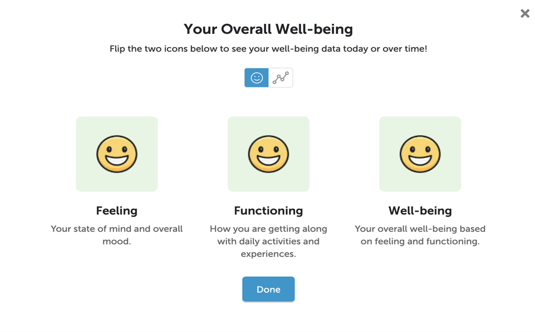
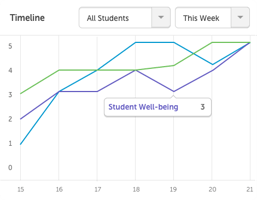
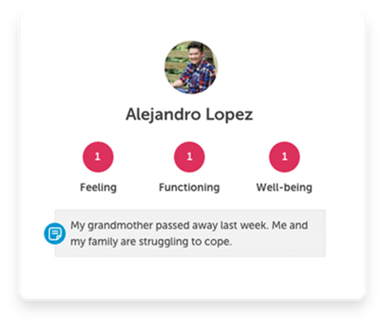
The Well-Being Check-In (60–90 seconds): Developed in partnership with The Center for Whole Child Education, the Well-Being Check-In provides a real-time, proactive pulse check on a student’s current mental and emotional readiness to learn before instruction begins. It helps educators hear directly, quickly and systemically from all students, and captures a holistic view of how each student is feeling and functioning. This real-time data is used to drive responsive, tiered interventions and targeted student support.
The Hope Survey (2 minutes): We examine Hope not as a fleeting emotion, but as a measurable cognitive trait. Developed in partnership with Cathleen Beachboard, best-selling author of The School of Hope, this tool measures AGENCY (the determination to reach your goals) and PATHWAYS (the ability to create ways to meet your goals and overcome barriers). This data equips educators with actionable insights to help students map out backup plans, navigate obstacles and actively drive their own long-term growth and success.

The 60-Minute Investment: In less than an hour of total screen time in an academic school year, educators gain the precise data needed to personalize learning pathways, tailor instruction, and to begin to cultivate a strength-based learning environment. This Less Screen strategy allows educators to gather meaningful insights without increasing digital fatigue for students.
When we limit mindless scrolling and maximize these brief, intentional digital touchpoints, we transition from tech-dominant classrooms to human-centric ones. We begin to know our students by their names, needs, interests, and aspirations.
Let’s look at the numbers to see how the ‘Less Screen, More Seen’ approach shift plays out:
| Resource | Time Investment | Educator Insight Gained |
Strengths Assessment | 30-45 minutes (1 time) | Core strengths, hidden interests and aspirations, and intrinsic motivators for each student |
Well-Being Check-In | 60-90 seconds (1x weekly) | Real-time feeling and functioning baselines to support each student instantly |
Hope Survey | 2 minutes (2x a year) | Student agency, goal-setting capacity, and cognitive resilience |
TOTAL IMPACT | < 1 Hour / Year | A foundational start to a personalized, strengths-based, joyful and hopeful learning environment |
By intentionally capping device usage and focusing on these high-yield resources, we aren’t just managing behavior, we are unlocking strengths, supporting well-being and instilling Hope. We are setting the ultimate conditions for learning.
A Less Screen approach allows educators to focus more deeply on students’ strengths, needs, interests, and aspirations. Ultimately, Less Screen does not mean less learning, it means more intentional learning, stronger relationships, and a greater understanding of every student. Let’s power down the distractions so we can finally power up the human connection.
Click HERE to connect with me!
Your partner in humanizing learning,
Dr. Marion Smith Jr.
Chief Learning Officer
Dr. Marion Smith Jr. is an impact-driven career educator, racial equity leader and scholar practitioner. He has served as a public school teacher, school principal, chief academic officer, superintendent of schools and assistant state superintendent across 6 states. He is the co-author of the Racial Equity Adaptive Leadership (R.E.A.L.) Framework ©, and a life-long learner with an earned doctorate degree in educational leadership and change from Fielding Graduate University, a law degree from the Sandra Day O’Connor College of Law at Arizona State University, and child and adolescent psychology certification from The Chicago School. Currently, he supports schools and districts across the nation as chief learning officer at Thrively – a social impact EdTech company revolutionizing education through strengths-based education and asset-based learning.