Skip to content
Share your Impact Story

Unlock Student Strengths: Know Students Before You Measure Them

Across six states, from classroom teacher to serving as a principal, superintendent, and assistant state superintendent, I have navigated multiple levels of our public education system. Across all these structures, one persistent truth remains: We know how our students are performing, but we rarely know who they are. We often measure student performance before understanding student strengths, interests, and aspirations.

Our dashboards are filled with grades, test scores, attendance rates, behavior logs, and demographic data. While these data points offer a snapshot, they are not the whole story. We cannot support what we don’t understand. Teaching a student without knowing their inner world creates a fundamental disconnect.

What happens when we look beyond performance and uncover a student’s strengths, interests, aspirations, and Hope levels? Better outcomes follow: Research shows students are 30 times more engaged when schools focus on their strengths. Hope, not as an emotion, but as a measurable cognitive trait, is one of the single strongest predictors of academic success. Interest-driven learning builds persistence, while positive well-being unlocks higher executive functioning.

At Thrively, we anchor this work in the Core 4 Conditions for Learning:

When these conditions are met, every student is seen, heard, and valued.

Student Strengths Across the System

A View from the Classroom

At the teacher level, starting with a strengths-based perspective changes daily interactions. Instead of viewing a student through a behavioral deficit, a teacher equipped with a Thrively Student Strengths Profile recognizes a highly curious, kinesthetic learner seeking agency. Knowing a student’s specific interests allows educators to tailor literacy prompts, project-based tasks, and daily check-ins that ignite intrinsic motivation, transforming classroom management into genuine connection.

picture credit: Dr. Smith guest teaching a class when he served as Deputy Superintendent of Academics of St. Louis Public Schools

A View from the School Level

For school-based administrators, prioritizing humanized learning redefines culture and climate. Building leaders establish a proactive, positive environment when staff meetings and professional development begin with student and staff strengths. When principals focus on who students are, school-wide behavior systems shift from punitive discipline to restorative, strengths-aligned support, creating a safe and supportive learning environment where students and educators want to be every day.

picture credit: Dr. Smith posing with student leaders when he served as school principal in Seattle Public Schools

A View from the Central Office

From the superintendent’s desk, knowing students shifts systemic strategy. District leaders often attempt to fix equity gaps solely through curricular audits or standardized intervention programs. However, when central offices prioritize humanized data alongside performance metrics, resource allocation shifts. Professional development focuses on relational trust, systems measure holistic well-being, and policies evolve to support the whole child, driving lasting systemic transformation.

picture credit: Dr. Smith facilitating a professional learning session when he served as superintendent of schools of Summit School District

Thrively in Action: Redefining Engagement

We see this shift happening daily in Thrively schools across the country. Instead of traditional parent-teacher nights centered on academic deficiencies, schools leverage Thrively Student Strength Profiles to host student-led conferences.

  • Rethinking the First Call Home: Educators send a personalized Strengths Certificate home during the first weeks of school. This initial outreach spotlights each child’s unique strengths, interests and aspirations, immediately setting a positive tone and building trust with families before any academic or behavioral issues arise.
  • Embedding Strengths into Daily Practices: Educators, support teams, and administrators leverage a student’s top five strengths across all key touchpoints including student-led conferences, Tier 2/3 intervention conversations, and Professional Learning Community (PLC) planning meetings. Starting every discussion from a place of capability transforms how teams support student growth.

When we commit to knowing students before measuring them, the impact is undeniable: Improved school climate, higher academic achievement, reduced discipline infractions, stronger teacher retention, and closing equity gaps.

You are already doing great work! Let’s take it to the next level of positive impact. To learn how Thrively can support you in implementing the Core 4 Conditions for Learning and build a strengths-based foundation, reach out to me at marion@thrively.com or visit www.thrively.com to explore more.

Click HERE to schedule time to meet with me directly. 

Thriving Together!

Dr. Marion Smith Jr. | Chief Learning Officer 

Dr. Marion Smith Jr. is an impact-driven career educator, equity leader and scholar practitioner. He has served as a public school teacher, school principal, chief academic officer, superintendent of schools and assistant state superintendent across 6 states. He is the co-author of the Racial Equity Adaptive Leadership (R.E.A.L.) Framework ©, and a life-long learner with an earned doctorate degree in educational leadership and change from Fielding Graduate University, a law degree from the Sandra Day O’Connor College of Law at Arizona State University, and child and adolescent psychology certification from The Chicago School.

Currently, Dr. Smith supports schools and school districts across the country as chief learning officer at Thrively – a social impact EdTech company revolutionizing education through strengths-based education and asset-based learning.

Strengths-Based School Year: Create Belonging Before Becoming

Throughout my career from standing in front of my first classroom to leading school districts and serving at the state level. I’ve learned one undeniable truth: Learning cannot happen without belonging. As we step into a new strengths-based school year, the temptation to jump straight into pacing guides and compliance metrics is strong. But if we want high-performing, resilient, and joyful schools, we must flip the script. Before we ask students and educators to achieve, we must ensure they feel valued, seen, and connected.

A strengths-based school year begins by focusing on what students and educators already bring. Recognizing their strengths, experiences, and aspirations creates the foundation for engagement, connection, and meaningful growth.

At Thrively, we begin with one question: “What’s Strong with You?” True transformation doesn’t begin with fixing deficits; it begins by identifying and celebrating what is right with our staff and students. Belonging and supportive learning environments aren’t optional add-ons. they are the prerequisite foundational conditions for learning required to unlock human potential. Cultivating strong connections and hope sparks joy, empowering students and educators to build on their strengths.

How to Support the Shift This Year

  • For School and District Leaders: Focus on the adults first. You cannot expect educators to create strengths-based, joyful and hopeful classrooms if they are running on empty. Prioritize staff well-being, honor their unique strengths, and model a culture where connection precedes content.
  • For Educators: Design your physical and emotional space around asset-based experiences. Spend the first weeks uncovering your students’ innate strengths, interests, and aspirations rather than just assessing their skill gaps.

A strengths-based school year requires everyone in the system to play a role. Leaders create the conditions for connection and well-being. Educators bring those conditions into the classroom. And students experience the difference when they are seen for what they can bring, not simply measured by what they still need to learn.

Building a strengths-based school year is not about adding another initiative. It is about creating the conditions where students and educators can feel valued, seen, and connected. When we begin with strengths, belonging, and connection, we create a stronger foundation for learning, growth, and achievement.

Experience the “Culture of Care”

If you want to continue your work from theory to practice to positive impact, I invite you to join us. Thrively offers a foundational, hands-on professional learning experience called Culture of Care.

This research-backed experiential session helps educators directly experience what it feels like to cultivate a strengths-based, joyful learning environment, equipping you with actionable strategies to identify innate strengths, support well-being, and instill Hope across your entire system.

You’re already doing great work! Let’s amplify and maximize your efforts by providing students and educators the foundation they need to thrive throughout the strengths-based school year. Connect with me directly to learn more or to schedule a Culture of Care professional learning session. Let’s make this strengths-based school year a journey of hope, strength, and true belonging. 

Click HERE to connect with me!

Your partner in humanizing learning,

Dr. Marion Smith Jr. | Chief Learning Officer 

marion@thrively.com 

Dr. Marion Smith Jr. is an impact-driven career educator, equity leader and scholar practitioner. He has served as a public school teacher, school principal, chief academic officer, superintendent of schools and assistant state superintendent across 6 states. He is the co-author of the Racial Equity Adaptive Leadership (R.E.A.L.) Framework ©, and a life-long learner with an earned doctorate degree in educational leadership and change from Fielding Graduate University, a law degree from the Sandra Day O’Connor College of Law at Arizona State University, and child and adolescent psychology certification from The Chicago School.

Currently, he supports schools and school districts across the country as chief learning officer at Thrively – a social impact EdTech company revolutionizing education through strengths-based education and asset-based learning.

Screens Down, Strengths Up: Why the Impactful ‘Less Screen, More Seen’ Movement Matters

Throughout my career in public education from the organized chaos of my first middle school classroom as a teacher to the strategic boardroom of the state department of education as an assistant state superintendent I’ve noticed a recurring tension. Every few years, a new mandate rolls out, and educators brace for impact. Today, that mandate is the push to limit K-12 screen time. The growing Less Screen, More Seen movement is prompting educators to rethink how technology is used in schools and how we can maximize meaningful human connection.

The goal of a Less Screen approach is not to eliminate technology altogether, but to ensure every digital interaction serves a meaningful educational purpose.

When I first heard the voices demanding we pull students away from their devices, my inner educator and scholar-practitioner cheered, but my administrative brain paused. I asked myself: If we turn off the screens, what are we putting in their place? As the Chief Learning Officer at Thrively, my answer is simple: We replace the screen with the student.

The true foundation of education isn’t the device; it’s connection. It’s knowing our students deeply. Ironically, the best way to support a screen-limiting initiative is to use technology with radical efficiency and effectiveness. We don’t need students staring at devices for hours to understand who they are. In fact, we can capture targeted, whole-child data in less than one hour across an entire academic school year.

Less Screen, Greater Student Insight

A Less Screen approach encourages schools to focus on quality over quantity when it comes to technology use, ensuring that every minute spent on a device contributes to student growth. At Thrively, we use three targeted approaches that respect both classroom time and digital well-being. Because when you truly know your students, you create the conditions for learning. 

The Strengths Assessment (30–45 minutes): The industry’s first strengths assessment developed by pediatric neuropsychologists for children and adolescents. This helps students identify, understand, and articulate their unique top strengths, interests and aspirations, moving the needle from what is wrong with a student to what is strong with them.

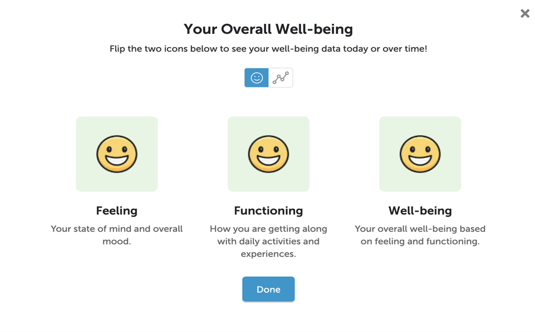
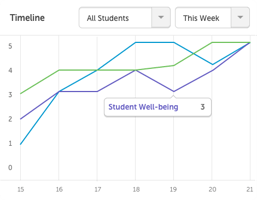
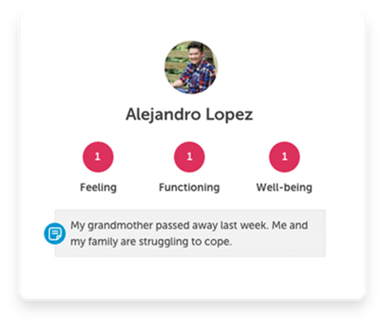
The Well-Being Check-In (60–90 seconds): Developed in partnership with The Center for Whole Child Education, the Well-Being Check-In provides a real-time, proactive pulse check on a student’s current mental and emotional readiness to learn before instruction begins. It helps educators hear directly, quickly and systemically from all students, and captures a holistic view of  how each student is feeling and functioning. This real-time data is used to drive responsive, tiered interventions and targeted student support. 

The Hope Survey (2 minutes): We examine Hope not as a fleeting emotion, but as a measurable cognitive trait. Developed in partnership with Cathleen Beachboard, best-selling author of The School of Hope, this tool measures AGENCY (the determination to reach your goals) and PATHWAYS (the ability to create ways to meet your goals and overcome barriers). This data equips educators with actionable insights to help students map out backup plans, navigate obstacles and actively drive their own long-term growth and success.  

The 60-Minute Investment: In less than an hour of total screen time in an academic school year, educators gain the precise data needed to personalize learning pathways, tailor instruction, and to begin to cultivate a strength-based learning environment. This Less Screen strategy allows educators to gather meaningful insights without increasing digital fatigue for students.

When we limit mindless scrolling and maximize these brief, intentional digital touchpoints, we transition from tech-dominant classrooms to human-centric ones. We begin to know our students by their names, needs, interests, and aspirations.

Let’s look at the numbers to see how the ‘Less Screen, More Seen’ approach shift plays out:

ResourceTime InvestmentEducator Insight Gained

Strengths Assessment
30-45 minutes
(1 time)
Core strengths, hidden interests and aspirations, and intrinsic motivators for each student 

Well-Being Check-In

60-90 seconds
(1x weekly)

Real-time feeling and functioning baselines to support each student instantly

Hope Survey

2 minutes
(2x a year)

Student agency, goal-setting capacity, and cognitive resilience

TOTAL IMPACT

< 1 Hour / Year 

A foundational start to a personalized, strengths-based, joyful and hopeful learning environment 

By intentionally capping device usage and focusing on these high-yield resources, we aren’t just managing behavior, we are unlocking strengths, supporting well-being and instilling Hope. We are setting the ultimate conditions for learning.

A Less Screen approach allows educators to focus more deeply on students’ strengths, needs, interests, and aspirations. Ultimately, Less Screen does not mean less learning, it means more intentional learning, stronger relationships, and a greater understanding of every student. Let’s power down the distractions so we can finally power up the human connection.

Click HERE to connect with me!

Your partner in humanizing learning,

Dr. Marion Smith Jr.

Chief Learning Officer 

marion@thrively.com 

Dr. Marion Smith Jr. is an impact-driven career educator, racial equity leader and scholar practitioner. He has served as a public school teacher, school principal, chief academic officer, superintendent of schools and assistant state superintendent across 6 states. He is the co-author of the Racial Equity Adaptive Leadership (R.E.A.L.) Framework ©, and a life-long learner with an earned doctorate degree in educational leadership and change from Fielding Graduate University, a law degree from the Sandra Day O’Connor College of Law at Arizona State University, and child and adolescent psychology certification from The Chicago School. Currently, he supports schools and districts across the nation as chief learning officer at Thrively – a social impact EdTech company revolutionizing education through strengths-based education and asset-based learning.

1 2 … 7