Skip to content
Share your Impact Story

Hope in Education: Improving Working Conditions and Preventing Teacher Burnout

Sense of Hope – Improving working conditions & Fostering teachers to prevent “Burnout”

Hope plays an important role in supporting teacher well-being and preventing burnout. Schools across the country face increasing levels of employee stress as worker shortages, pandemic-related challenges, and secondary trauma contribute to demanding workloads.

Improving working conditions and fostering a positive outlook for the future can help schools address these challenges and create a more supportive environment for educators.

Understanding Teacher Burnout and Its Causes

Teacher burnout is a growing concern in education. Heavy workloads, staffing shortages, and ongoing stress can affect educators’ well-being and their ability to manage everyday responsibilities.

A 2021 research study examines three key dimensions of burnout: exhaustion, cynicism, and inefficacy.

Understanding these challenges can help school leaders identify opportunities to improve working conditions and provide meaningful support for their staff.

How Hope Can Help Prevent Teacher Burnout

Creating a supportive school environment involves more than simply reducing stress. Educators also benefit from having clear goals, meaningful connections, and confidence in their ability to move forward.

Hope psychology provides a framework for understanding how individuals identify goals, explore different pathways to achieve them, and maintain motivation when facing challenges.

School leaders can apply these principles to encourage resilience and help teachers feel more supported in their professional lives.

However, fostering a positive mindset should complement, rather than replace, practical improvements in staffing, workloads, and school working conditions.

Practical Ways School Leaders Can Support Teachers

Cathleen Beachboard, author of School of Hope, highlights small practices that school leaders can introduce to support educator well-being and reduce the risk of burnout.

Her work focuses on helping schools create environments where teachers feel valued, supported, and encouraged to approach challenges with confidence.

For additional insights, read Cathleen Beachboard’s Edutopia article on building hope and preventing teacher burnout.

Bringing Hope Into the Classroom With Thrively

The importance of emotional well-being extends beyond educators to the students they support.

After adopting five children who had experienced trauma and neglect, Cathleen Beachboard explored Charles R. Snyder’s pioneering research into Hope Theory. This experience inspired her commitment to helping children develop a stronger sense of possibility for their futures.

Through her collaboration with Thrively, Cathleen Beachboard has worked to bring these principles into educational settings.

Thrively’s approach to hope in education reflects the importance of helping students recognize their potential, develop confidence, and look toward the future with purpose.

By supporting teacher well-being, improving working conditions, and encouraging resilience, schools can create learning environments where educators and students have greater opportunities to thrive.

Parents Have Strengths Too!

Parents have strengths too, and recognizing those strengths can create meaningful connections between families, students, and educators. At Marshall Elementary School in the Chula Vista School District, parents of Gifted and Talented students came together to discover and celebrate their unique strengths through Thrively.

Parents Have Strengths Too!

Celebrating Student and Parent Strengths at Marshall Elementary School

Marshall Elementary School brought together families for an engaging experience led by Principal Dr. Loyce and Michael Bruder, Director of Innovation and Instruction.

Before the event, each student completed the Thrively Strengths Assessment, providing an opportunity to discover their individual strengths.

As parents entered the school’s large multipurpose room, they were welcomed with friendly smiles and a variety of resources designed to support students’ cognitive development and emotional wellness.

Parents Have Strengths Too: A Shared Learning Experience

During the presentation, Dr. Loyce shared her learning journey and commitment to ensuring that the school recognizes and amplifies every student’s strengths, interests, and aspirations.

As the evening came to a close, Principal Loyce introduced one final activity. Each parent created a free Thrively account and completed the Strengths Assessment.

Families then shared their individual strengths through collaborative conversations, creating an opportunity for parents to learn more about themselves and one another.

Building Stronger Connections Through Strengths-Based Learning

We all know that students have strengths, but adults do too.

By encouraging parents to explore their own strengths, Marshall Elementary School created an opportunity for families to experience the same strengths-based approach their children had already begun exploring.

Thrively makes it easy for students, parents, and educators to recognize and share what makes each person unique.

Because recognizing strengths isn’t just for students. Parents have strengths too!

Thrively Expands in Chicago Public Schools with Strengths-Based Education

Thrively in Chicago Public Schools is continuing to grow, bringing strengths-based education to more educators and students. The growing presence of Thrively in Chicago Public Schools reflects its commitment to helping educators recognize and nurture the unique strengths of every learner.

A big thank you to Principal Thompson for her leadership and for bringing Thrively’s strengths-based approach to Paul Revere Elementary School.

Chicago Public Schools & Revere Elementary

Strengths-Based Professional Development at Paul Revere Elementary School

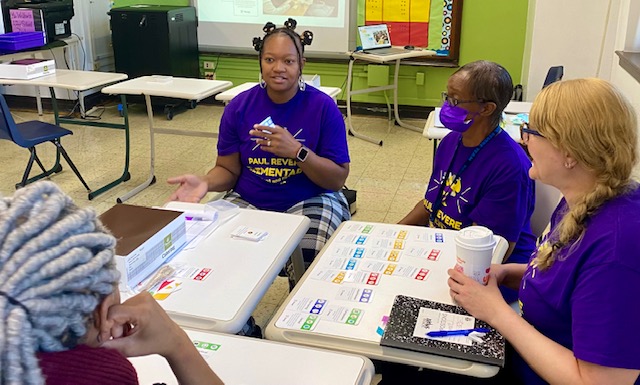
Thrively recently led a professional development workshop with faculty at Paul Revere Elementary School in Chicago Public Schools.

During the workshop, teachers had the opportunity to take the Thrively Strengths Assessment for themselves. They also took time to reflect on their individual strengths and recognize the strengths of their fellow teachers through discussions and small-group activities.

The workshop provided a meaningful opportunity for educators to better understand their own strengths while celebrating the unique strengths of their colleagues.

What a great way to kick off the school year!

Thrively in Chicago Public Schools: Supporting Social and Emotional Learning

Thrively is an approved Ed Tech provider for Chicago Public Schools and has been awarded RFPs for Out of School Time Health & Wellness programs as well as Social & Emotional Learning Services.

Through its social and emotional learning programs, Thrively helps educators better know their students, attend to their well-being, instill hope, and teach essential life skills.

By helping teachers recognize individual strengths, Thrively supports a learning environment where students feel understood, valued, and empowered to thrive.

Helping Every Child Discover Their Strengths

At Thrively, we believe that every child has a genius and deserves to thrive.

Our strengths-based learning approach helps educators recognize students’ unique strengths, interests, and aspirations.

Our work with Paul Revere Elementary School reflects this belief and our commitment to helping educators recognize and nurture the unique strengths of every learner.

Discover how Thrively supports the whole child and helps students thrive.

1 … 8 9